
































.avif)













On any given day, the sounds of urban life whiz through the University of Nebraska Medical Center campus in midtown Omaha. But tucked into a nook near the university’s College of Public Health, sits an outdoor space that provides a sense of calm and reflection amid the city's energy.
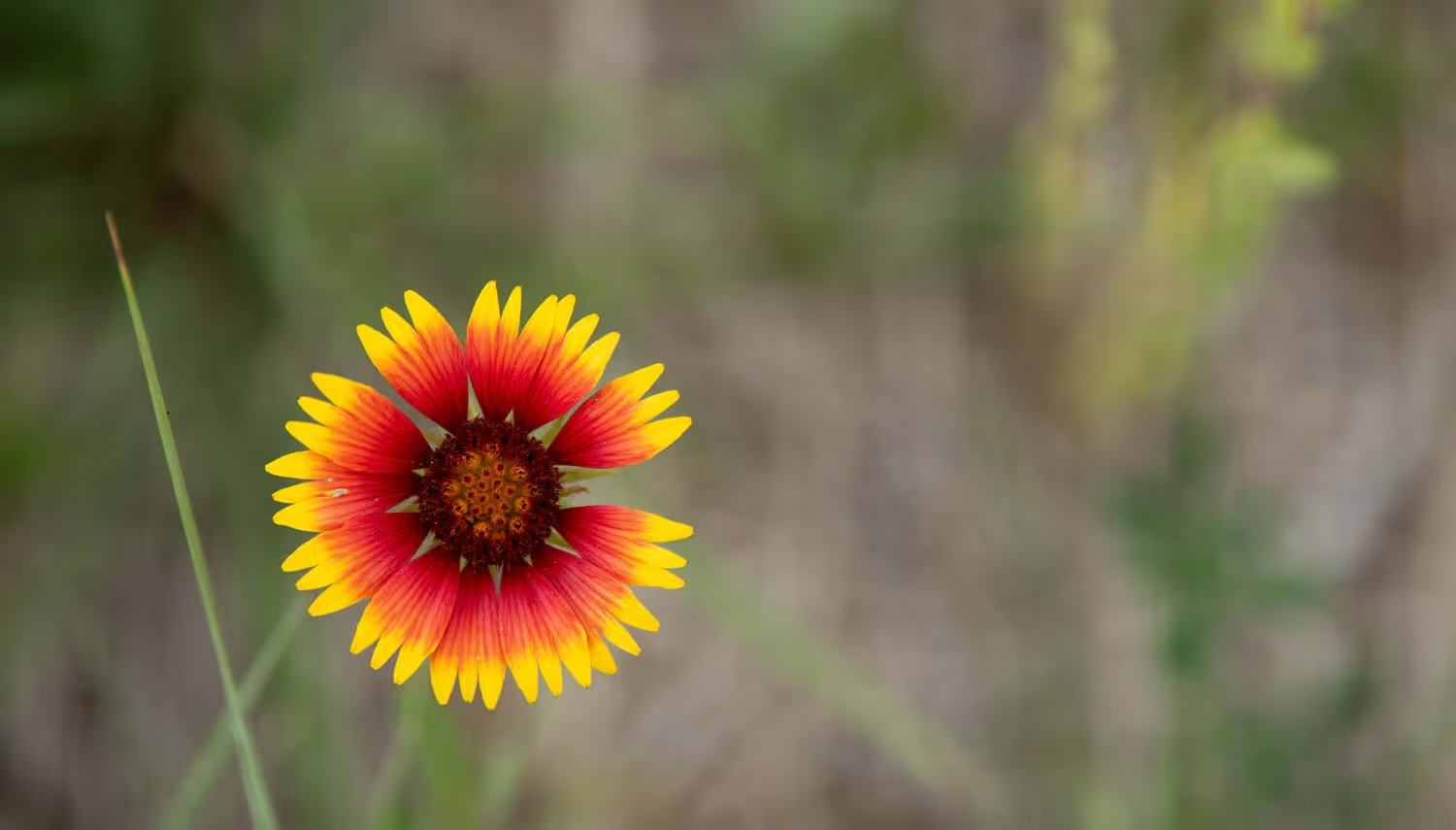
The UNMC Indigenous Medicine Garden features several thousand square feet of Indigenous plants, native grass, benches, and curving pathways. The colorful space is a spot where students, professors, patients, and community members can enjoy a peaceful moment. But it's much more than a quiet garden.
It’s a place designed to help visitors learn, reflect, and connect with a world much larger than their own. And it represents UNMC’s commitment to Indigenous health, education, and community engagement.
The garden “reflects the unbreakable bond between people and their environments.”
Dr. Ali Khan, dean of the UNMC College of Public Health, said the garden “reflects the unbreakable bond between people and their environments.”
Tribal seals on benches throughout the garden recognize five Tribes in Nebraska: the Iowa Tribe of Kansas and Nebraska, the Omaha Tribe of Nebraska, the Winnebago Tribe of Nebraska, the Santee Sioux Nation, and the Ponca Tribe of Nebraska. In collaboration with these Tribes, UNMC is developing culturally informed harvesting practices to guide garden visitors into a relationship of reciprocity, respect, and gratitude with the garden.
The garden builds on a growing network of Indigenous campus-based gardens across the Omaha area, spanning elementary, secondary, and higher education institutions.
The idea for the UNMC Indigenous Medicine Garden was conceived in 2020 by Drs. Regina Idoate and Aislinn Rookwood, faculty members in the UNMC College of Public Health. Idoate, director of the college's Spirituality, Culture, and Health Lab, envisioned the garden through the concept of “three-eyed seeing”, a framework that recognizes Indigenous knowledge, environmental stewardship, and community wellbeing.
It builds on a growing network of Indigenous campus-based gardens across the Omaha area, spanning elementary, secondary, and higher education institutions.
Idoate and Rookwood inspired a team of project partners who brought the garden to life. They included Indigenous gardener Mi’oux Stabler, cultural educator Steve Tamayo, ecologist Dr. Travis Robbins, UNMC facilities planner Archie Carpenter, and Olsson senior landscape architect and project manager Kayla Meyer. In addition to these key contributors, the garden was supported by many generous philanthropic partners throughout the community.
For Meyer, the process of designing the garden changed how she views her work.
“We created this garden with so much attention to native landscapes and Indigenous lands,” she said. “The whole process gave me such a great respect for the importance of place and people and history.”
The design-build process included engagement of local Indigenous youth, educators, patients, healthcare providers, and scientists. Community members gathered for a ground blessing ceremony prior to the garden's construction. Idoate (Cherokee Nation), Stabler (Omaha Nation), Tamayo (Sicangu Lakota), and Robbins (Cherokee Nation) all have Indigenous heritage.
“The whole process gave me such a great respect for the importance of place and people and history.”
The garden’s path from conceptual design and fundraising to construction and dedication took about six years. But the physical garden came together in just two months. Construction began in April 2026 - with Olsson working closely with Omaha-based Mulhall's nursery - and finished before the garden's dedication in June 2026.
UNMC's Carpenter said “it took all hands to get it done.” He gave Olsson’s Meyer credit for shepherding the garden from concept to completion. “She coordinated the project, ran meetings, and kept everyone in the loop,” he said. “The leadership Kayla provided really allowed everything to work out.”
Meyer's heartfelt dedication to the garden and its mission was recognized and celebrated when she - along with Rookwood and Robbins - were each honored with a blanket by the community.
"Stewardship is a word and a practice that carries a lot of meaning among Native people. Kayla embodies it," said UNMC's Idoate. "She had patience and heart. She organized and coordinated. And she shared ideas with so much creativity and respect. We truly would not have this garden without Kayla."