






















.avif)








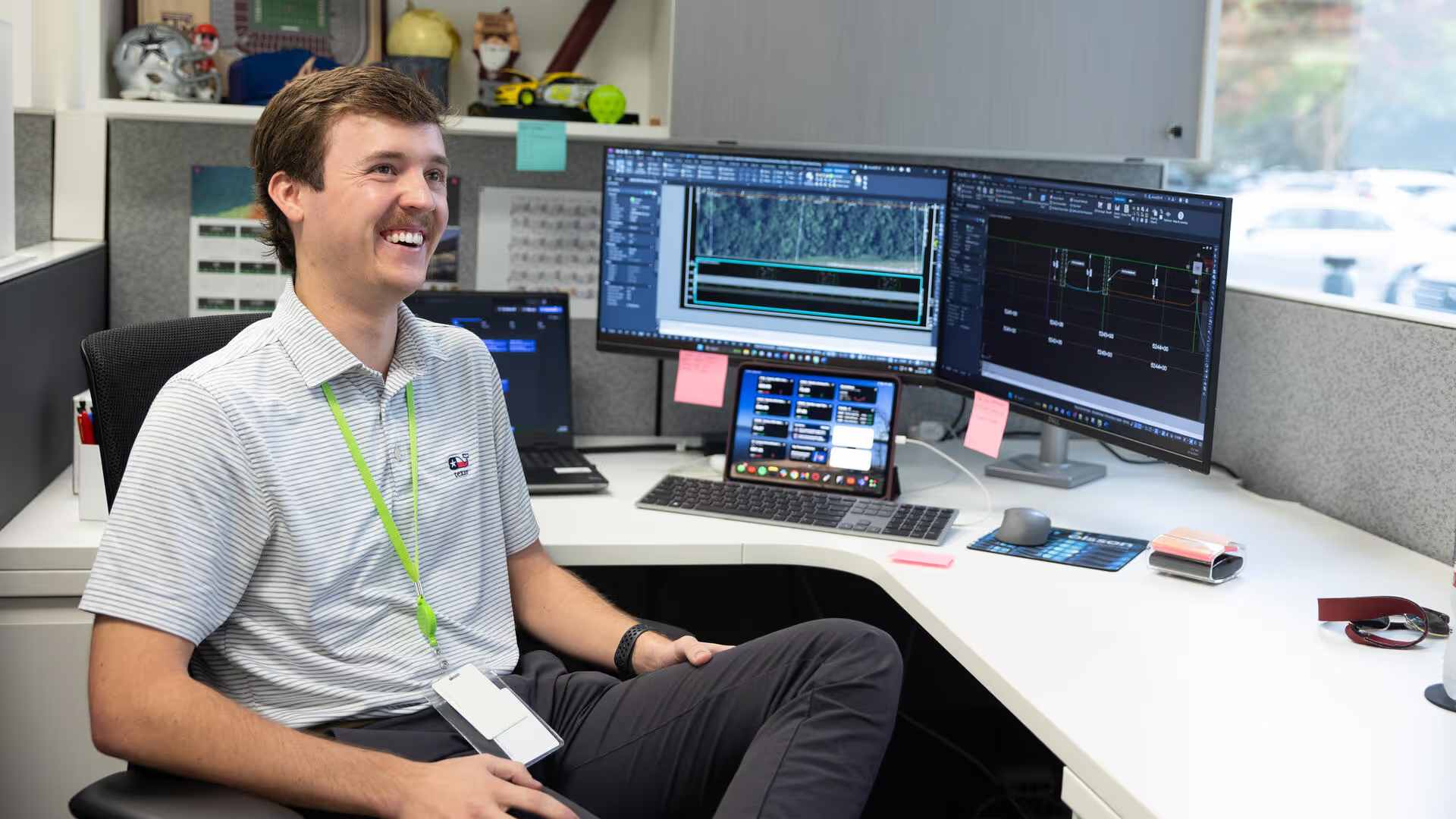


The view from an engineering classroom is a little different than one from an active airfield in Alaska. Often, the classroom provides the foundation, but the field is where everything starts to click.
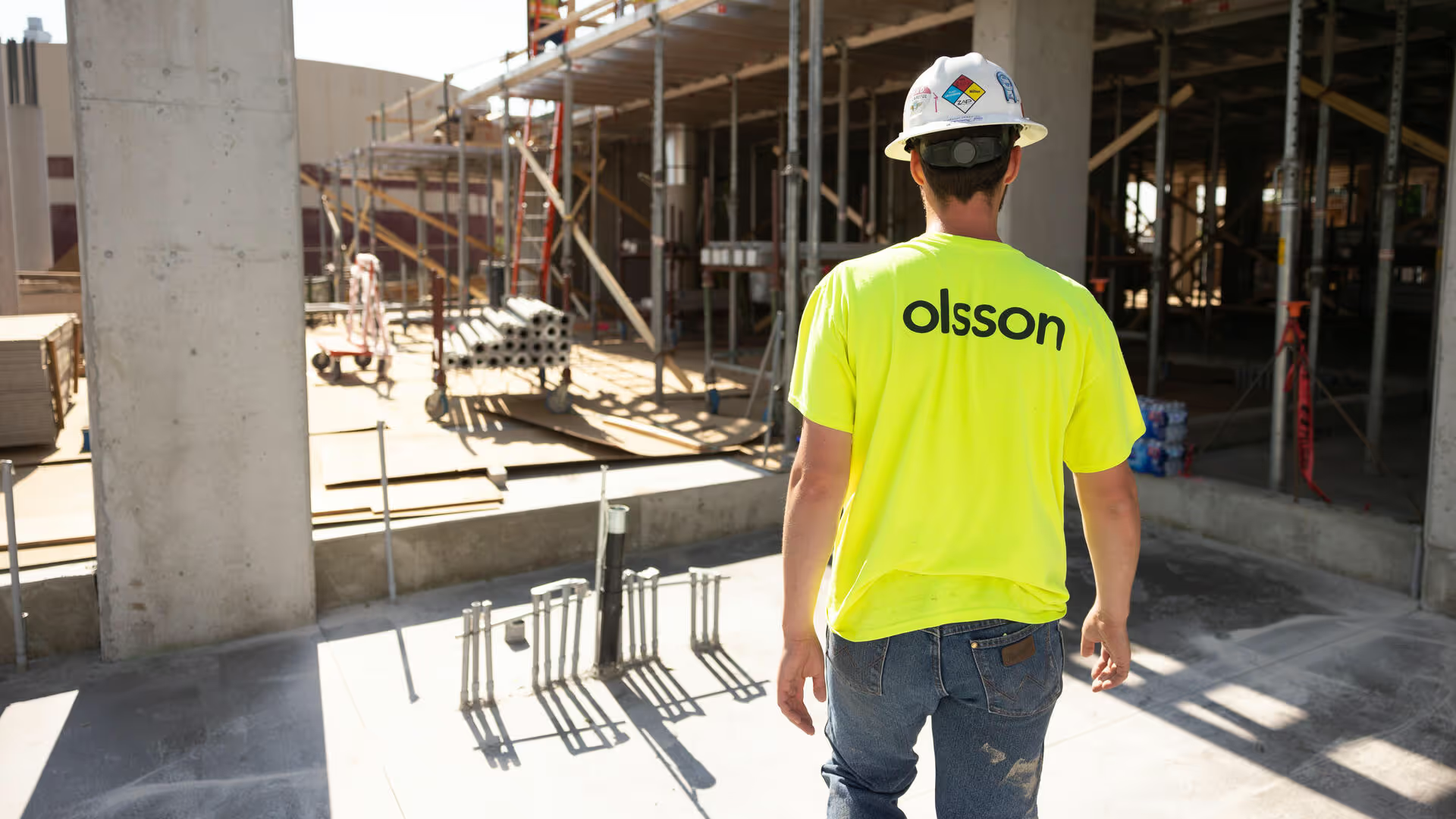
For Nate Jones, an Olsson intern studying civil engineering at the University of Nebraska-Lincoln, the past year has offered many opportunities to see engineering beyond the textbook.
As a roadway and bridge intern, Nate works to help safely connect communities by improving the infrastructure they rely on daily. Recently, he had the opportunity to work alongside his team on a federal project in Alaska.
We sat down with Nate to discuss his internship journey, the unique Alaska project opportunity, and advice for future interns.
Q: What drew you to Olsson and this internship?
I first met members of the Olsson team at a career fair my freshman year. The next year, I went back and talked with a few other companies, but Olsson still felt like the best fit. I talked with someone who I clicked with right away because we were both interested in structures and bridges. That conversation made me feel like this was where I wanted to be. The person I spoke with is now my supervisor, and it’s been a great nine months interning at Olsson.
Q: What were you hoping to learn during your internship?
I came in wanting to figure out if structural engineering was actually what I wanted to do. With this internship, I wanted to see what the work looked like day to day. I was curious about how bridges and structures were designed, inspected, and eventually built. I’ve been able to see a lot more of that full process than I expected. I thought I’d mostly be sitting at a desk, but I’ve gotten to be in the field, which has been really helpful.
Q: What have you learned from visiting project sites?
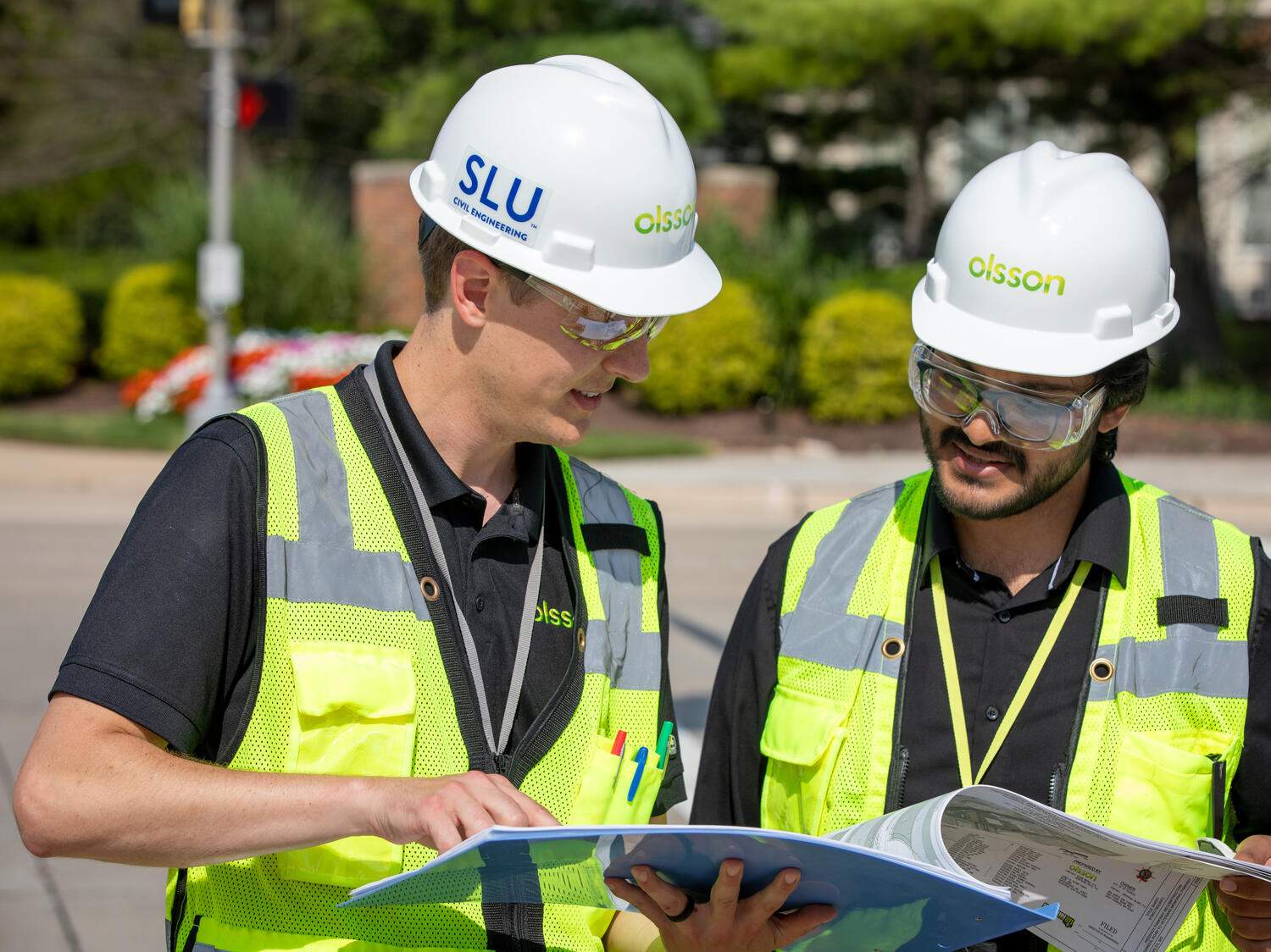
In the office, you see a lot of things in drawings or in reports. Then when you get out and go into the field, you’re actually able to see how things line up. For inspections, we’d look at old reports and as-builts, then compare that to what was actually there. It helps you understand what changed, what stayed the same, and what you needed to document. Getting hands-on experience at a project site makes the work feel a lot more real than just looking at something on a sheet.
Q: Can you tell me about the project you worked on in Alaska?
Olsson was selected for a federal project that included inspections, load ratings, drawings, and quality control work. We worked at Eielson Air Force Base, which is about a 20-minute drive southeast of Fairbanks. The airstrip was right next to where we were working. We’d see F-16s, F-35s, and KC-130s taking off during the day, sometimes in formations. A couple of the culverts were on the airstrip, so we had to coordinate with the tower and know when planes were coming in or taking off. There was also a rescue helicopter that flew right over us during training, so there was always something going on.
The Alaska inspections have probably been the biggest thing I’ve worked on so far that’s stood out during my internship. I became a lot more comfortable with inspection terms, taking photos, and writing descriptions that were detailed enough for the reports. Doing that repeatedly for 25 structures helped it click pretty quickly.
Q: How has your team supported you as an intern?
Since the start of my internship, I’ve felt like I was part of the team and could help with real project work. Whether it was redlines, inspections, or jumping in on a deadline, they trusted me to contribute. There was one pedestrian bridge project where everyone was working together to get it done, and I felt included in that. My team has also been good about school coming first, so if I have class or a test, they understand.
Q: What advice would you give future Olsson interns?
My biggest advice is to write stuff down. If there’s a procedure, a project step, or something you think you might need later, keep track of it. I usually send notes to myself, so I can go back and update them when I learn something new. Then, when a similar project comes up later, I have something to reference before I ask someone. It saved me a lot of time.