





















.avif)











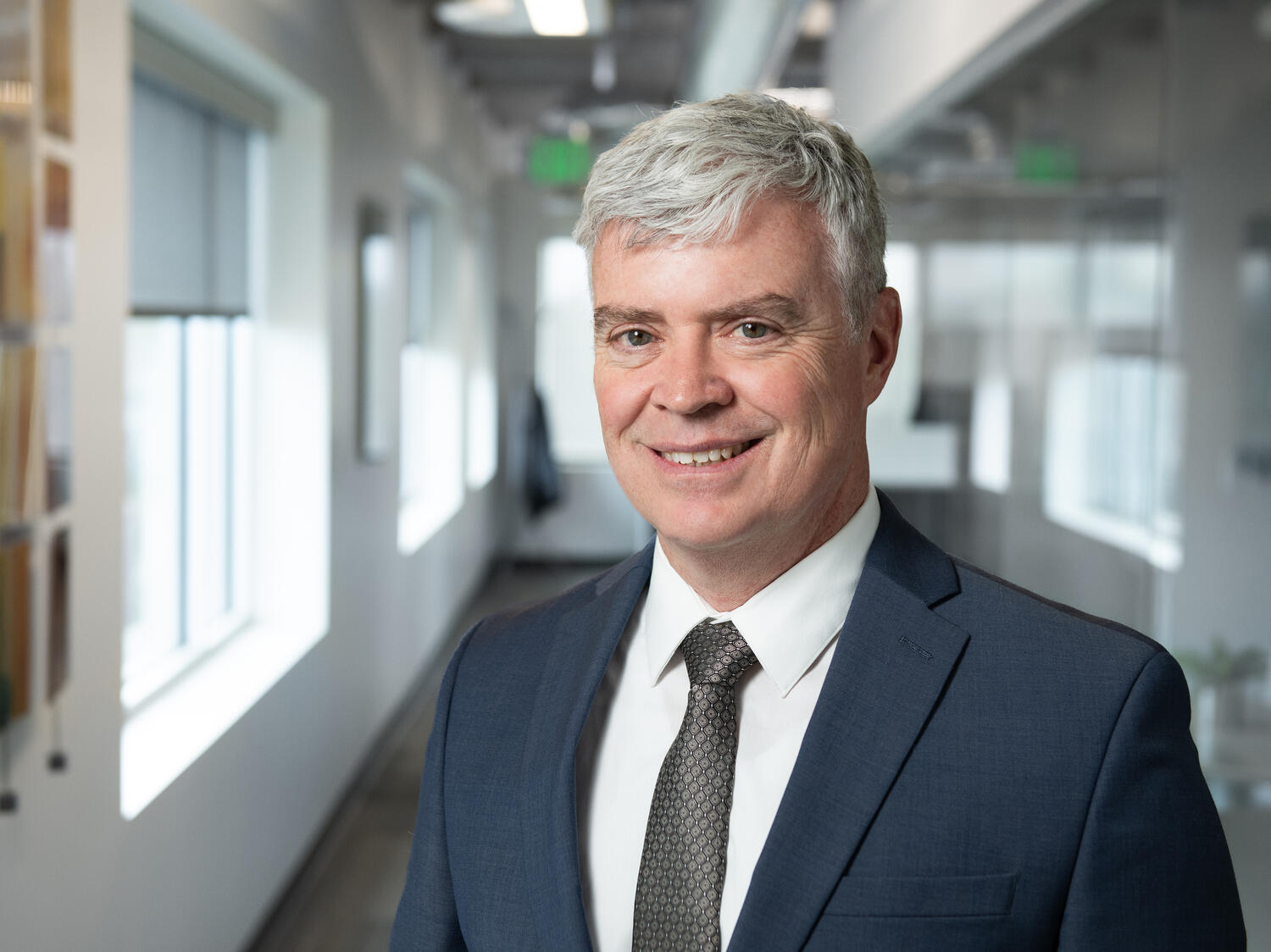
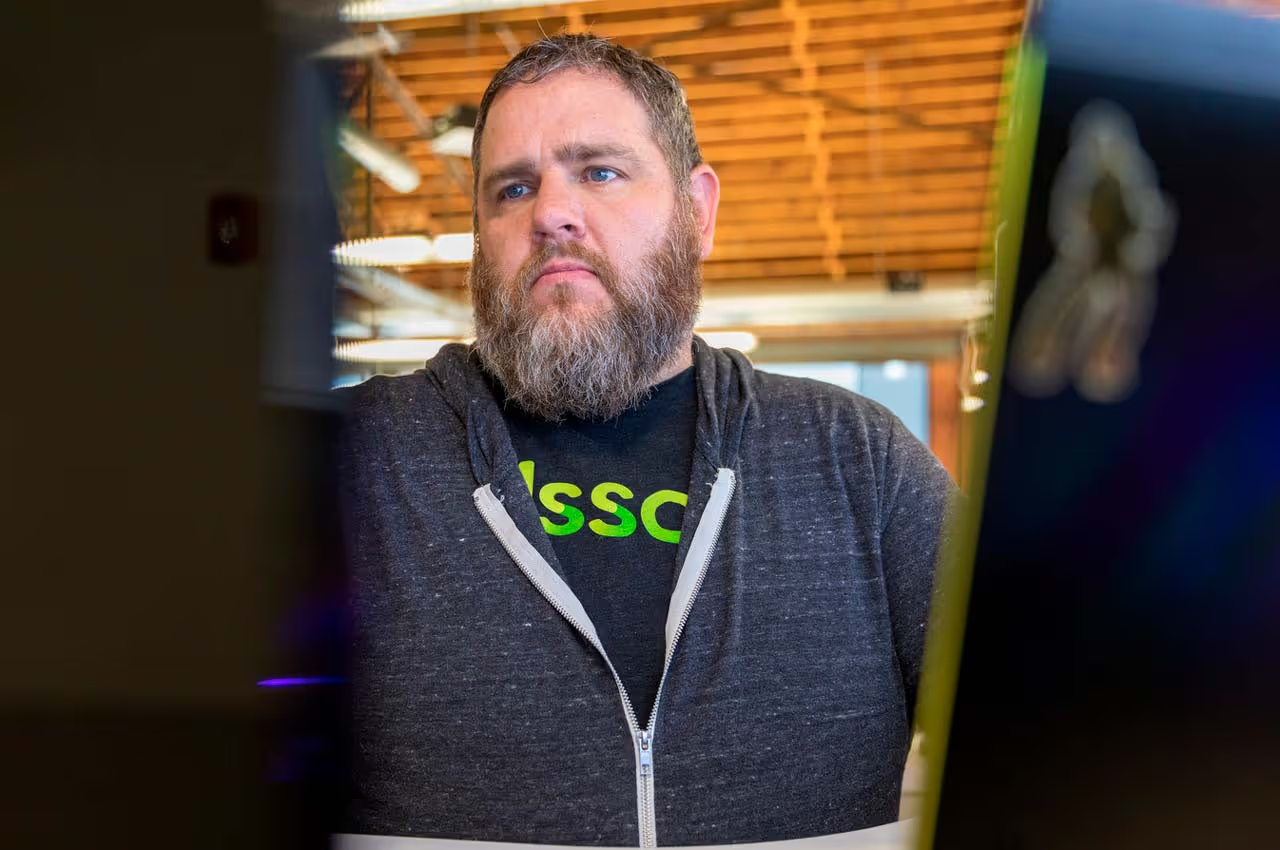
Today, Allen Thompson is a technical expert for Olsson. In 2001, he was a structural engineer based in New York who wound up in the heart of recovery efforts at Ground Zero.
ALLEN THOMPSON can’t say for sure what he was working on, but he’ll never forget the radio.
“It was a typical morning; I was just plugging away at our office in New Jersey,” said Thompson, a structural engineering technical expert for Olsson.
Back then he worked for WSP Cantor Seinuk, and he often sat by a talk radio fanatic. “One of the principals always had WABC on, and he typically listened intently. But I remember needing to pause and ask, ‘Etao, did you hear that?’
“‘I think they just said a jet crashed into the World Trade Center.’”
Like most of us, Thompson spent the next few hours watching TV in disbelief. About an hour after a second airliner struck the twin towers, the South Tower collapsed into a billowing mass of steel, concrete, and toxic dust. Thirty minutes later, the North Tower fell.
It would take weeks, months – even years – for many to process the loss of life and range of emotions stemming from the attacks of September 11, 2001. For Thompson, the shock, anger, and hopelessness were stronger.
A few of his coworkers were working across the street that morning. More than one had to dig out from under debris; one did not survive. Four days later, Thompson began consulting on-site in the yearslong effort to recover and rebuild the centerpiece of Lower Manhattan.
The previously unimaginable sights, sounds, and smells of Ground Zero were now his workplace.
***
TWENTY-FIVE YEARS LATER, Thompson recalls a point that day when he turned away from the TV and went for a quick drive. He wound up in, of all places, a Home Depot parking lot.
“There was a amazing panoramic view of New York City from that spot,” he said, adding a quick editorial, “so, of course they put a store there.”
Thompson’s office was nearby, but by the time he reached the lot, the view of the twin towers from across the Hudson had been reduced to smoke – lots of smoke.
“It was surreal to look across the river and not see the towers,” Thompson said. “But that was nothing compared to when we got to the jobsite. I don’t think the human mind can comprehend what we were seeing when we got on-site.”
***
THOMPSON ARRIVED AT GROUND ZERO on September 15. He and another senior engineer led damage survey teams as they assessed structural stability and advised on safe debris removal. They began in a heavily damaged building that, ultimately, “hadn’t moved that much.”
The exercise turned out to be just a warm-up.
Completed in 1974, the Deutsch Bank Building stood 42 stories, just across Liberty Street from the South Tower. It was severely damaged and heavily contaminated by the South Tower collapse.
Steel and concrete had impaled the Deutsche Bank Building’s north facade, displacing a major load-bearing column from floors 22 through 9. Its structural integrity severely compromised, the building looked like “a piece of cake with a fork stuck in it,” one witness told The Associated Press.
Meanwhile, the WTC collapse blew out the bank building’s windows, coating the interior with toxic dust and other unpleasant debris.
“Among the buildings that remained standing, Deutsche Bank was arguably one of the worst, damage-wise,” Thompson said.
***
THE SCOPE OF DESTRUCTION AT GROUND ZERO was so great that recovery efforts quickly became all hands on deck.
“Every company had to have engineers down there around the clock because there were safety issues and there was so much work to do,” Thompson said. “Anytime someone cut a piece of steel or concrete, you had to have a structural engineer there to advise.”
As a senior leader, Thompson’s contributions were weighty and long-lived. The fragility of the Deutsche Bank Building required him to continuously monitor wind and weather patterns. If wind speeds got too strong, anyone within a 1,000-foot radius of the building would need to evacuate the area. Thompson also spent months advising Deutsche Bank and representing the company in meetings.
From the start, he recommended the building be demolished. But it wasn’t that simple.
***
SOMETHING YOU NEED TO KNOW about Thompson, his boss at Olsson says, is that the bigger and more complex the challenge, the better he seems to get.
“Allen doesn’t hesitate to dive into problems that are unique or interesting,” Olsson Executive Vice President Adam Christensen says. “Even this far into his career, he’ll go out and learn and try new things.”
That curiosity has earned Thompson a slew of structural engineering honors. Known for his expertise with steel, his teams have won awards for projects big (the New York Mets’ 1.2-million-square-foot Citi Field ballpark) and unique (he engineered removal of 31 columns while planning the conversion of a large industrial space into a sports complex).
Of course, curiosity can invite trouble, too. Thompson won’t forget his first day on the Deutsch Bank site.
“I was in the building crawling up a pile of debris and almost up to the ceiling when I went to step over to the other side of the pile and realized there was no other side,” he said. “It must have been a three- or four-story fall to another pile of debris. I backed away from the edge and decided right then I wasn’t going to try that again. I could have been done after the first day.”
***
THE DANGER WAS REAL in the Deutsche Bank Building.
Most stakeholders, including the building’s owners, agreed the structure should be demolished. But it wasn’t safe to demolish immediately, Thompson said. Counterintuitive as it may seem, the building needed to be stabilized to where it was safe enough to demolish.
Like other buildings near Ground Zero, it also had to be decontaminated.
“The pressure wave when the towers collapsed blew out windows and blew in dust with asbestos and silica dust from crushed concrete,” Thompson said. “And there was a ton of mercury to deal with because there were a bunch of old thermostats in those buildings. Each one had like half-a-teaspoon of mercury in it.”
Mercury’s affinity for steel complicated matters. So did the mercury-tainted fumes from frequent fires. Smoke and fumes of any kind were an ongoing problem.
“I think we all knew we weren't safe because the smell of that smoke was insidious, and it was everywhere,” Thompson said. “It was in the subway – you could go in the subway years later and still smell it – and you knew that whatever it was, it wasn’t good.”
***
THOMPSON COULD TALK FOR HOURS about the vacillation and clerical red tape associated with the Deutsche Bank project. Insurance issues and indecision over the best path forward were partly why the building stood until 2011.
Thompson never wavered in believing restoration of the building’s skeleton was the best move. Deutsch Bank officials weren’t as convinced, Thompson said, partly out of fear that repairing the building's framework might tempt insurers to propose re-inhabitation.
“Putting steel back in would be the cheapest, safest thing to do,” Thompson said. “It would get rid of all the safety issues. It would get rid of the scaffolding rentals. It would eliminate the need to babysit the building for 10 years. It just made the most financial sense.”
Roughly 2½ years after the attacks, Thompson and proponents of shoring up the building’s bones got their wish. The fabrication and erection of repairs allowed for safe decontamination and, eventually, demolition.
***
BY THE TIME THE DEUTSCHE BANK BUILDING CAME DOWN, signs of hope were sprouting at Ground Zero.
The 74-story 4 World Trade Center Tower was completed in 2013. A year later, the 1,776-foot, 104-story Freedom Tower (1 World Trade Center) opened.
Thompson participated in both achievements. He managed a team inspecting subsurface infrastructure on the Freedom Tower and led a team designing steel connections at 4 World Trade Center. He also contributed during late-stage design of the global bathtub, the massive underground slab connecting and supporting all new World Trade Center structures.
“It was a real point of pride once things got to where you could see a tower, where people could see progress,” he said.
***
THE THOUSANDS OF ENGINEERS who worked at Ground Zero simply “made sure buildings weren’t going to collapse further,” Thompson said.
“We didn’t have it nearly as bad as people like the iron workers that were down on the pile, doing demo and cutting steel all day.”
Still, a lack of formal crisis training and the length of time spent at Ground Zero may explain an American Journal of Psychiatry finding that, among nearly 29,000 WTC recovery workers surveyed, engineers and construction workers were most at risk of developing post-traumatic stress disorder.
For his part, Thompson says his stress was more heat-of-the-moment. And that he’d do it all again.
“I've never seen contractors and engineers and everybody just rowing together every day to get rid of this monumental mess,” he said.
“I think most of us felt like we were doing our duty, you know, almost in a patriotic sort of way. We were there to clean up a mess and make something beautiful out of it.”